AI-native medical education.

Your curriculum.
A clearer path for every learner.

ChatOMT connects your institution’s curriculum, learning objectives, assessments, and learner evidence in one inspectable system. It helps faculty preserve alignment, trace the impact of curriculum changes, and reduce the manual work of review.

That same foundation grounds AI conversations, collaborative learning, and personalized curricular assistance in what your school actually teaches, using evidence from each learner to guide what comes next.

Figure 1 Didactome

A curriculum graph built from a school’s lecture decks, replayed lecture by lecture in the order the material is taught.

Curriculum as the reference

Start with what the school teaches.

The institution’s own material.

Concepts and mechanisms stay connected to the curriculum and the sources from which they were derived.

From a lecture page to the curriculum graphA finding on page 12 of the renal tubular acidosis lecture, urine pH above 5.5 despite systemic acidosis, is extracted as a claim. The claim becomes a relationship in the graph: Type 1 distal RTA has the finding urine pH above 5.5. The relationship keeps a link back to the page it came from.1 LECTURE PAGEType 1: three findings predictthe complicationsK lowRenal potassiumwastingCaP stonesAlkaline urine,low citratepH > 5.5Despite systemicacidosisRENAL TUBULAR ACIDOSIS · PAGE 122 EXTRACTED CLAIMType 1 distal RTA keeps urine pHabove 5.5 despite systemic acidosis.Source: Renal tubular acidosis, page 123 CONCEPTS AND RELATIONSHIPShas findingcausescomplicationType 1 distal RTAUrine pH > 5.5HypokalemiaCalcium phosphate stonesprovenanceFrom a lecture page to the curriculum graphA finding on page 12 of the renal tubular acidosis lecture, urine pH above 5.5 despite systemic acidosis, is extracted as a claim. The claim becomes a relationship in the graph: Type 1 distal RTA has the finding urine pH above 5.5, with a link back to the page.1 LECTURE PAGEType 1: three findings predictthe complicationsK lowRenal potassiumwastingCaP stonesAlkaline urine,low citratepH > 5.5Despite systemicacidosisRENAL TUBULAR ACIDOSIS · PAGE 122 EXTRACTED CLAIMType 1 distal RTA keeps urine pHabove 5.5 despite systemic acidosis.Source: Renal tubular acidosis, page 123 CONCEPTS AND RELATIONSHIPShas findingcausescomplicationType 1 distal RTAUrine pH > 5.5HypokalemiaCalcium phosphate stonesRTA lecture, p. 12
  1. 01

    Your lectures

    Start with the slides and recordings you already use.

  2. 02

    Text and transcript extraction

    Each page and recording is read for its claims.

  3. 03

    Content analysis

    Claims are resolved into concepts and relationships.

  4. 04

    Knowledge connected

    Every relationship keeps a link to the page behind it.

Figure 2 Didactome

Blocks, courses, faculty and sessions, imported from registrar exports.

The curriculum graph

Make the relationships inspectable.

The Didactome represents concepts and the relationships among them while retaining links back to their curricular sources.

Concepts.
The discrete entities being taught.
Relationships.
The mechanisms, distinctions, dependencies, and associations that connect them.
Provenance.
The curricular material supporting each extracted claim.

Figure 3 Didactome

A renal physiology course replayed lecture by lecture. Each concept and relationship appears where it is first taught.

Mapping is only the beginning.

LEARNING OBJECTIVE ASSURANCE

Define what must be taught. Verify where it happens.

Each learning objective becomes a requirement the curriculum is checked against. ChatOMT evaluates each objective against the Didactome to determine where it is taught, how deeply it is addressed, and whether the institution’s requirements for coverage and assessment are satisfied.

FROM OBJECTIVE TO DETERMINATION

DEFINED / CONSTRAINED / AUDITABLE
  1. 01

    DEFINE

    Write learning objectives in plain language or import them from an existing spreadsheet.
  2. 02

    CONSTRAIN

    Specify where, when, and how deeply each objective must be addressed.
  3. 03

    VERIFY

    Evaluate the curriculum against those requirements and retain the supporting evidence.

LEARNING OBJECTIVE AUDIT

EXAMPLE OBJECTIVE / RENAL PHYSIOLOGY

OBJECTIVE SATISFIED

PROGRAM OBJECTIVE

REVISION 04

“Apply acid-base physiology to distinguish the major renal tubular acidosis subtypes.”

OBJECTIVE ID REN-4.2
OBJECTIVE SET Renal Competencies
CURRICULAR SCOPE Renal sequence

Designated courses and instructional units

MINIMUM DEPTH Application

Recognition alone is insufficient

INSTRUCTION Required

Objective must be explicitly taught

ASSESSMENT Required

Assessment evidence must be present

OBJECTIVE SATISFACTION DETERMINATION

ALL CURRICULAR CONSTRAINTS SATISFIED

The objective is taught at the required depth, all required course contributions are present, and qualifying assessment evidence was identified. Every determination remains connected to the curricular evidence used to make it.
STATUS
Satisfied
FACULTY ACTION
None
  • 3 EVIDENCE SOURCES
  • 2 / 2 REQUIRED COURSES
  • APPLICATION DEPTH REACHED
  • 4 OBJECTIVE REVISION

WHY IT MATTERS A semantic match alone does not satisfy an objective. The evidence must satisfy the institution's declared requirements.

Figure 4 Didactome

The same evaluation in Didactome: every objective in a set carries a coverage verdict, and opening one shows the lectures and questions behind it.

OBJECTIVE LINEAGE

Keep the map when the curriculum changes.

Curricula evolve. Learning objectives are revised, divided, combined, and replaced. ChatOMT preserves objective lineage across curriculum generations so institutions can understand not only whether an objective is satisfied today, but how its requirements and curricular coverage changed over time.

OBJECTIVE LINEAGE REN-4.2 / ACID-BASE PHYSIOLOGY
3 GENERATIONS
  1. 2024 REV 01 IMPORTED

    Original institutional objective carried into the curriculum.

  2. 2025 REV 03 SPLIT

    Broader renal physiology objective divided into independently auditable requirements.

  3. 2026 REV 04 CURRENT

    Application-level RTA objective retained in the current Didactome.

PROVENANCE RETAINED Institutional history remains inspectable.
THE SAME SOURCE OF TRUTH CONTINUES DOWNSTREAM

Once the curriculum is aligned to its objectives, assessment can be evaluated against the same curricular model.

CURRICULUM-ALIGNED ASSESSMENT

Assessments map to the Didactome.

Mapping exam and practice questions to the Didactome ensures alignment with the curriculum. It helps educators identify gaps, catch potentially mis-keyed questions, and optimize learning outcomes.

ASSESSMENT MAPPING AUDIT

EXAMPLE CONTENT / RENAL TUBULAR ACIDOSIS

HIGH CONFIDENCE

QUESTION STEM

SINGLE SELECTION

A patient has metabolic acidosis, and the clinician plans to “confirm chronicity and determine the cause.” Which intervention is specifically described as correcting the acidosis while also raising urinary citrate?

  1. Use a treatment intended to lower urinary citrate while the cause is being evaluated.

  2. Use alkali therapy, especially potassium citrate when appropriate, to correct the acidosis and raise urinary citrate.

    KEYED ANSWER
  3. Withhold alkali therapy because determining the cause prevents any supportive treatment.

  4. Select therapy solely according to the urine pH, without addressing the acidosis.

  5. Use an intervention that corrects the cause but does not affect acidosis or urinary citrate.

PREFERRED REASONING PATH

1 PATH / FULLY SUPPORTED
  1. 01

    RECOGNIZE

    Identify metabolic acidosis as the abnormality the intervention must address.
  2. 02

    INTEGRATE

    Match the two stated effects: correcting acidosis and increasing urinary citrate.
  3. 03

    CONCLUDE

    Select alkali therapy, especially potassium citrate when appropriate.

CURRICULAR ALIGNMENT DETERMINATION

NO CURRICULAR ALIGNMENT CONCERN DETECTED

The keyed answer is supported by the curriculum and uniquely preferred by the decisive stem findings. No faculty action is recommended at this time.
CONFIDENCE
High
FACULTY ACTION
None
  • 5MAPPED OPTIONS
  • 3CURRICULUM TARGETS
  • 2DECISIVE STEM CLUES
  • 0UNRESOLVED REFERENCES

SCOPE Alignment only. Difficulty, discrimination, reliability, and other psychometric properties are evaluated separately.

Figure 5 Didactome

In Didactome, every question in a quiz is checked against the curriculum. One is flagged as a potential miskey, and its audit explains why.

A missed answer should lead somewhere.

Knowing an answer was wrong is only the beginning. Useful support connects what needs attention, where it was taught, and what the learner should do next.

  1. 01

    What needs attention?

    A fact to recall, a relationship to clarify, or a concept to apply. Different learning needs call for different kinds of support.

  2. 02

    Where was it taught?

    The relevant concept, lecture, and explanation in the student’s own curriculum, so review has a clear starting point.

  3. 03

    What should happen next?

    A focused review, a comparison of related concepts, or targeted practice that helps the learner apply what they know.

Each student assessment adds evidence. Remediation targets change as the evidence does.

ASSESSMENT RESPONSE ANALYSIS

Explain the error with its evidence.

EVIDENTIARY SUPPORT

User metrics from the exam software provide insight into the learner's thought process.

WHAT HAPPENED

The final selected answer matches a competing mechanism.

WHAT TO DISTINGUISH

Connect the relevant clinical clues to the mechanism that separates the competing concepts.

RESPONSE ANALYSIS

FORMATIVE / SINGLE SELECTION
COMPLETE

A 27-year-old woman with Sjögren syndrome presents with muscle weakness and recurrent nephrolithiasis. Laboratory studies show Na+ 139 mmol/L, Cl- 115 mmol/L, HCO3- 15 mmol/L, and K+ 2.8 mmol/L. Urine pH is 6.3, and the urine anion gap is positive. Which renal abnormality best explains these findings?

Impaired hydrogen ion secretion by alpha-intercalated cells

Correct answer

Reduced proximal bicarbonate reabsorption

Your selection

Decreased aldosterone production

Increased proximal ammonium generation

Impaired collecting-duct water permeability

Increased distal sodium delivery

You selected Reduced proximal bicarbonate reabsorption. Your response history also included a change toward the correct option, which suggests meaningful partial knowledge even though the final answer was incorrect.

Prioritize Urine pH is 6.3 and recurrent nephrolithiasis. Together, these findings distinguish Alkaline Urine in Type 1 RTA from the subtype represented by Reduced Bicarbonate Threshold in Type 2 RTA.

The best explanation is Defective distal hydrogen secretion in the Collecting duct. The selected answer instead matched the competing subtype pattern. This was a narrow subtype-discrimination error rather than evidence of a broad gap.

10 MIN

Review how Urine pH is 6.3 functions as a discriminator for Alkaline Urine in Type 1 RTA, then practice using it to separate this pattern from Reduced Bicarbonate Threshold in Type 2 RTA.
The report names the distinction worth revisiting, where it was taught, and how long a focused review should take.

LONGITUDINAL LEARNER SUPPORT

Carry the evidence forward.

Each assessment contributes evidence to an ongoing learner model. New data can refine, or contradict, earlier interpretations of the student’s understanding. All assessment items are longitudinally integrated to inform future learning decisions.

01

ITEM EVIDENCE

Assessment data is captured from ChatOMT and your school's exam software.

02

RECONCILE

New evidence is integrated with the existing learner model as it arrives.

03

PRIORITIZE

Recommend the next best action for the learner.

04

EXPLAIN

Retain the reason and relevant curriculum-graph references.

Evidence informs an interpretation and yields a continuous, personalized learning loop.

Figure 6 Didactome

Faculty see the class: accuracy over time, the weakest concepts, and the misconceptions behind wrong answers.

NEXT BEST ACTION

Give the learner
a concrete next step.

Reduce the work of deciding what to study next by providing clear next steps. Study recommendations are ranked by impact.

NEXT BEST ACTION10 MINUTES

Distinguish clues for Type 1 RTA and kidney stones

WHY THIS TASK
  • Assessments show recurrent subtype confusion
  • Prerequisite for 3 other remediation targets
  • Recently covered in lecture
2 concepts / 1 relationship referenced

Figure 7 ChatOMT

In ChatOMT, the next best action leads each student’s dashboard, with the reasons it was chosen and the ranked queue behind it.

SCOPED EXPLORATION AND PROVENANCE

Trace the claim back to the lecture.

Select a concept.Inspect its support.

Explanations remain connected to the curricular material from which the relevant claims were derived.

Figure 8 Didactome

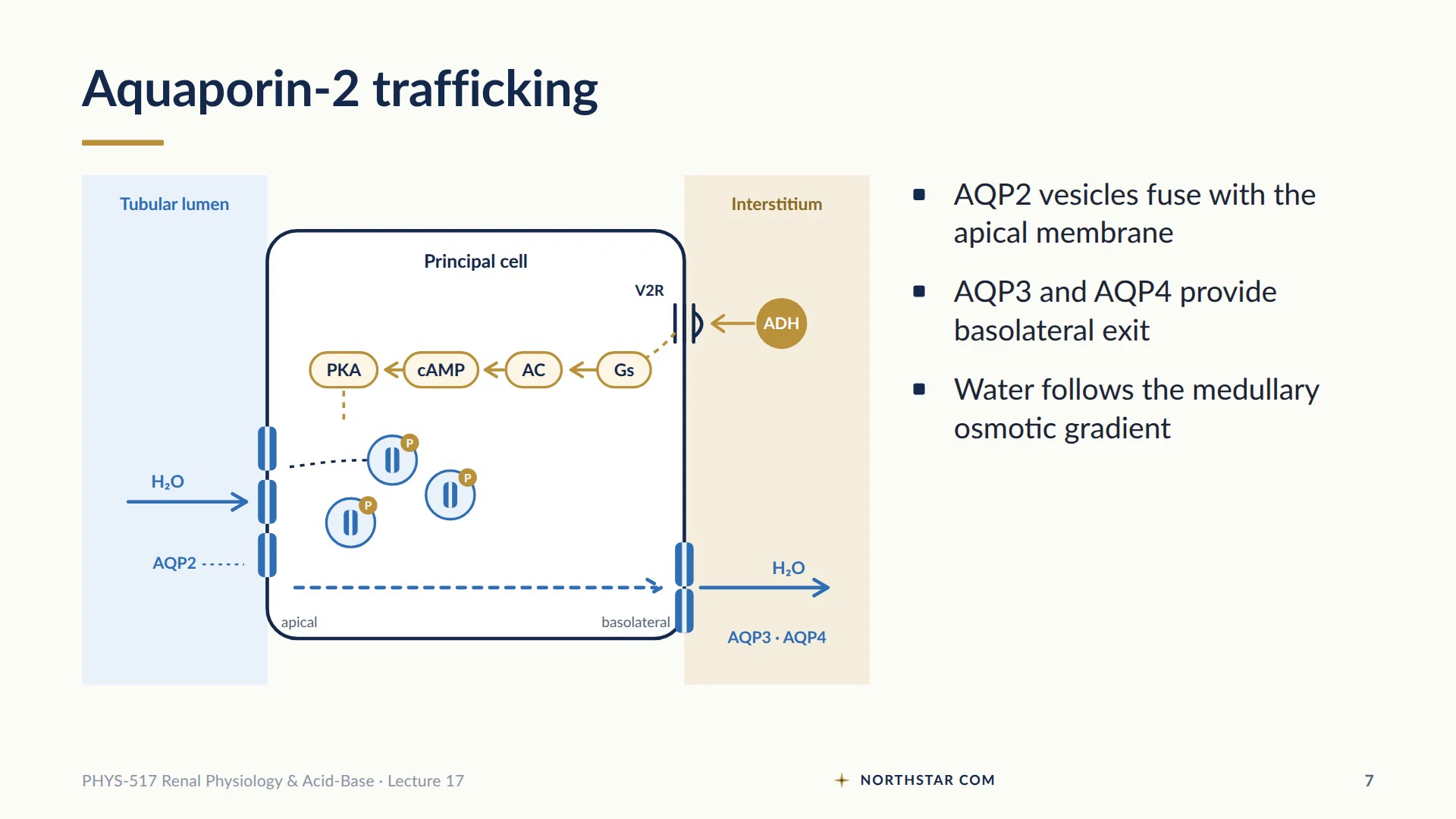
Searching the graph for aquaporin, opening the Aquaporin-2 concept, and opening the slide behind one of its claims.

VASOPRESSIN AND AQUAPORINS · PAGE 7 / EXTRACTED CLAIM MODEL CONFIDENCE: 93%

Aquaporin-2 is stored in subapical vesicles that fuse with the apical membrane when vasopressin signaling is active.

SUPPORTING PASSAGE
Lecture slide titled Aquaporin-2 trafficking. A principal cell diagram shows vasopressin acting through the V2 receptor so that AQP2 vesicles fuse with the apical membrane; the first bullet reads: AQP2 vesicles fuse with the apical membrane.

Confidence labels are model estimates, not independently measured accuracy.

ChatOMT

Bring support into the learning environment.

The same curricular context that supports analysis can support conversation, explanation, and targeted practice.

  • Personalized curricular assistance.
  • Peer and faculty discussion.
  • Targeted practice.

Figure 9ChatOMT

A student asks for help with the brachial plexus. The answer cites the lecture, the textbook and a recording, and a citation opens the exact page.

INSPECTABLE REASONING

Make the basis of an answer clear.

Different layers provide different kinds of assurance.

01

SOURCE GROUNDING

The curricular material supporting an explanation.

REFERENCE
02

CURRICULUM GRAPH

The concepts and relationships under discussion.

REFERENCE
03

MODEL-BASED ANALYSIS

An interpretation of the response and a proposed intervention.

INTERPRETATION
04

SYMBOLIC RULES, WHERE APPLICABLE

An execution trace for supported formal rules.

EXECUTION

Source support, inferred explanations, and symbolic checks provide different assurances.

INSTITUTIONAL GOVERNANCE

Build learner trust into the workflow.

Institutional policy sets the boundaries for educational AI.

Support remains formative.
Educators retain responsibility for consequential decisions.

01

Access

Institutions define who can see curriculum, learner evidence, and conversations.

02

Transparency

Expose source support, interpretation, and uncertainty.

03

Agency

Help learners understand why an action is recommended.

04

Control

Keep your curriculum and data within the walls of your institution by deploying ChatOMT on-premises.

FACULTY-LED EVALUATION

Evaluate the educational decisions.

ChatOMT is designed so that its educational claims can be examined and validated empirically.

01

Is the model faithful?

Expert review of relationships and source support.

02

Is the interpretation useful?

Educator agreement, false positives, and learner corrections.

03

Does remediation help?

New-item performance, delayed retention, and transfer.

04

Does the workflow help?

Planning burden, faculty effort, and performance across groups.

Work with ChatOMT

Start with one course.

ChatOMT is a working platform for institutions that want a curriculum-aware learning environment. Begin with one course, objective set, or assessment, and review what ChatOMT finds in your own material before going further.